The Apiary
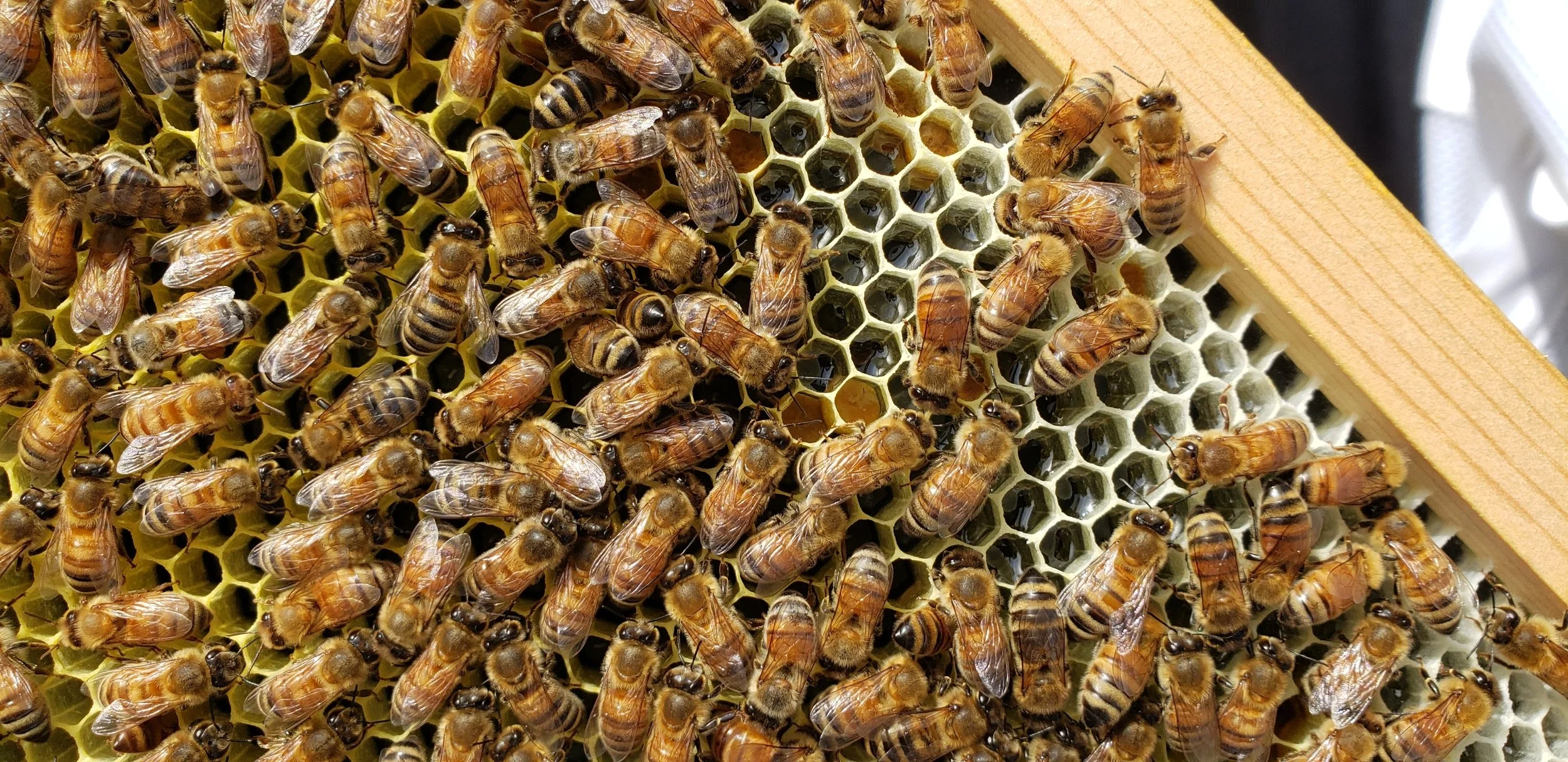
Our Bees
Stewards of the Hive
My love of bees started in my dad’s orchard, watching him and a friend suit up, fire up the smoker, and harvest honey straight from the hives. He could build or fix just about anything, even a honey extractor out of a garbage can! I still remember tasting fresh honeycomb for the first time and the excitement of that moment.
Years later, I found myself drawn back to the country life I grew up with and to my passion for bees. With their future increasingly uncertain, I decided to learn more, earning my Apprentice Beekeeper Certificate through the Inland Empire Beekeepers Association and completing my second-year course with the Palouse Beekeepers Club. Today, we keep hives, continue learning every day, and love sharing the sweet rewards of the hive with others.
A Life with Bees
Today, we care for three hives and have a deep love and respect for the hard work the bees do. Like our grapevines, the honey is truly a product of the land—shaped by the nectar the bees gather from the surrounding trees, plants, and flowers. Its color, flavor, and texture change with what the bees are feeding on. In the summer of 2025, nearby canola fields produced honey that crystallized faster than usual. A gentle warming brought it back to its natural state, and next year’s harvest may be completely different as the crops rotate.
Beekeeping is a true family effort. It relies on mentors, shared knowledge, and a strong community. I’m fortunate to have Washington State University right in our backyard, conducting important research on varroa mites, the tiny pests that can spread disease and threaten bee populations. Through the Palouse Beekeepers Club, I regularly learn from WSU speakers and connect with a supportive network of experienced beekeepers. If you’re a beekeeper, or curious about starting, I’d love for you to join us.
We hope you enjoy our honey and taste the joy in every spoonful. With gratitude, we thank our amazing bees for all they do.
FAQ
-
It takes 1,152 bees to travel 112,000 miles and visit 4.5 million flowers
-
A single hive can contain 50,000-60,000 bees. A queen bee can lay up to 2,000 eggs per day
-
They can communicate the location of a food source by doing a little dance called "waggling"
-
They can fly 15-20mph
-
Yes. There are very few male bees in a hive. Most bees are female. The only role of the male is to mate. The females do all the work in the hive. (Sound familiar ladies???? :)
-
Honey bees pollinate approximately 130 agricultural crops in the U.S. They are crucial to our food supply.
-
Disease, climate change, pesticides and poor nutrition have in recent years caused large losses in the U.S.
-
The ancient Romans used honey for currency instead of gold to pay their taxes.